
Bacterial transformation, a cornerstone of molecular biology, allows for the introduction of foreign genetic material into bacterial cells, fundamentally altering their characteristics.
This lab utilizes the pGLO plasmid, a circular DNA molecule, to demonstrate this process, offering insights into gene expression and antibiotic resistance mechanisms.
Understanding the principles behind pGLO transformation is crucial for comprehending genetic engineering and its applications in biotechnology and research, as documented in resources like Scribd.
What is Bacterial Transformation?

Bacterial transformation is a process where exogenous genetic material – DNA – is taken up by a bacterial cell, resulting in a heritable change in its genetic makeup. This isn’t a natural process for all bacteria; it requires competence, meaning the ability to bind and import free DNA from the surrounding environment.
In the context of the pGLO transformation lab, transformation is artificially induced, often using methods like heat shock or electroporation, to force the bacteria to accept the plasmid DNA. The acquired DNA can then be integrated into the bacterial chromosome or exist as an extrachromosomal element, like the pGLO plasmid itself.
Successfully transformed bacteria exhibit new traits encoded by the introduced DNA, such as antibiotic resistance or the ability to produce fluorescent proteins. Resources like the “Transformation Lab Key” available on Scribd detail the expected outcomes and provide a framework for understanding this fundamental genetic process, crucial for biotechnology.
The Role of the pGLO Plasmid
The pGLO plasmid serves as the vehicle for introducing new genes into bacterial cells during transformation. This circular DNA molecule isn’t part of the bacterial chromosome but replicates independently, carrying genes that confer specific traits. In the pGLO lab, it’s designed to contain genes for antibiotic resistance and, notably, the green fluorescent protein (GFP).
The plasmid’s role extends beyond simply delivering genes; it demonstrates how genetic information can be transferred and expressed in a new host. The “Transformation Lab Key” document, found on platforms like Scribd, highlights the importance of the pGLO plasmid in visualizing gene expression through fluorescence.
By observing whether bacteria exhibit fluorescence and resistance to ampicillin, students can directly assess the success of the transformation process and understand the function of the genes carried by the pGLO plasmid.
Understanding the pGLO Plasmid
The pGLO plasmid is a powerful tool for genetic modification, enabling researchers to study gene function and regulation within bacterial systems, as detailed online.
Components of the pGLO Plasmid
The pGLO plasmid, central to this transformation lab, is a carefully engineered circular DNA molecule containing several key components crucial for its function. These elements work in concert to enable bacterial cells to express specific genes and demonstrate resistance to antibiotics.
Firstly, it includes a gene for green fluorescent protein (GFP), allowing for visual identification of successfully transformed bacteria. Secondly, a gene conferring resistance to ampicillin is present, enabling selection of transformed cells on media containing this antibiotic.
Furthermore, the plasmid features a promoter, initiating GFP gene transcription, and a regulatory sequence controlled by arabinose. An origin of replication ensures plasmid duplication within the bacterial cell. Finally, it contains a multiple cloning site, facilitating the insertion of other genes for research purposes, as outlined in available lab resources.
GFP Gene and its Function
The GFP (Green Fluorescent Protein) gene, originating from the jellyfish Aequorea victoria, is a pivotal component of the pGLO plasmid, serving as a readily observable reporter gene. When expressed, GFP emits a bright green fluorescence under ultraviolet (UV) light, providing a visual indicator of successful transformation.
This fluorescence arises from a unique chemical reaction within the protein structure, requiring no external substrates or enzymes. In the pGLO lab, GFP expression is regulated by a promoter, activated in the presence of arabinose.
Consequently, bacteria transformed with pGLO and grown on arabinose-containing media will exhibit a noticeable green glow, confirming plasmid uptake and gene expression. Observing this fluorescence is a key step in analyzing transformation results, as detailed in lab manuals and online resources like Scribd.
Antibiotic Resistance Gene (Ampicillin)
The pGLO plasmid incorporates a gene conferring resistance to ampicillin, a common antibiotic. This gene encodes an enzyme, beta-lactamase, which inactivates ampicillin by breaking its beta-lactam ring, preventing it from inhibiting bacterial cell wall synthesis.
In the pGLO transformation lab, this resistance gene serves as a selectable marker. Bacteria that have successfully taken up the plasmid will survive and grow on media containing ampicillin, while those without the plasmid will be inhibited.
Therefore, plating transformed bacteria on ampicillin-supplemented LB agar allows for the selective isolation of cells harboring the pGLO plasmid. Analyzing growth on this media, alongside observations of fluorescence, is crucial for interpreting transformation outcomes, as outlined in available lab resources and documents like those found on Scribd.
Materials Used in the pGLO Transformation Lab
Essential materials include competent E. coli cells, pGLO plasmid DNA, LB broth, LB agar, ampicillin, calcium chloride, and inoculation loops for successful transformation.
Competent Cells
Competent cells are bacterial cells that have been prepared to accept foreign DNA, a crucial step in the transformation process. Naturally, bacteria possess a cell wall and membrane that impede DNA entry; therefore, cells must be treated to increase their permeability.
This is typically achieved through chemical competence, utilizing calcium chloride (CaCl2), or electroporation, employing a brief electrical pulse. Calcium ions neutralize negative charges on the DNA and cell membrane, facilitating DNA binding and entry.
In the pGLO lab, commercially prepared competent cells are often used for convenience and consistent results. These cells are specifically engineered to maximize transformation efficiency, ensuring a higher uptake of the pGLO plasmid. The viability and competence of these cells are paramount for successful experimentation, directly impacting the observable outcomes.
Proper handling and storage of competent cells are vital to maintain their ability to undergo transformation.

Calcium Chloride Solution
Calcium chloride (CaCl2) solution plays a pivotal role in enhancing bacterial competence, the ability of cells to uptake foreign DNA like the pGLO plasmid. The mechanism involves neutralizing the negative charges present on the phosphate backbone of DNA and the bacterial cell membrane.
This neutralization reduces repulsion, allowing the DNA to approach and bind to the cell surface more effectively. Furthermore, CaCl2 alters the cell membrane’s permeability, creating transient pores that facilitate DNA entry.
The concentration of CaCl2 is critical; too low, and competence is insufficient, while too high can be toxic to the cells. Typically, a series of CaCl2 treatments are employed during the transformation procedure to maximize DNA uptake.
Maintaining the solution’s sterility is also essential to prevent contamination and ensure reliable experimental results.
LB Broth and LB Agar
Lysogeny Broth (LB), both in liquid broth and solid agar forms, serves as the primary growth medium for E. coli bacteria during the pGLO transformation lab. LB broth provides essential nutrients – amino acids, vitamins, and carbohydrates – necessary for bacterial proliferation.
LB agar is created by adding agar, a solidifying agent, to LB broth. This solid medium allows for the creation of petri dishes where individual bacterial colonies can grow and be easily observed.
LB agar is often supplemented with ampicillin, an antibiotic, to select for bacteria that have successfully taken up the pGLO plasmid, which contains an ampicillin resistance gene. Only transformed bacteria will grow on LB agar plates containing ampicillin.
Proper preparation and sterilization of LB broth and agar are crucial to prevent contamination and ensure accurate results.

Procedure of the pGLO Transformation Lab
The pGLO lab involves preparing competent cells, introducing the plasmid via heat shock, and plating to observe transformed bacterial growth and fluorescence.
Preparing the Competent Cells
Competent cells are essential for successful transformation, as they possess the ability to uptake external DNA. This process typically involves treating bacterial cells, often E. coli, with calcium chloride (CaCl2).
The CaCl2 neutralizes the negative charges on the bacterial cell wall and DNA, facilitating DNA entry. Cells are incubated on ice, creating pores in the membrane, increasing permeability.
This chilling step is critical; it slows metabolic activity, preventing DNA degradation before transformation can occur. Maintaining a cold environment throughout the preparation is paramount for maximizing competency.
Gentle handling is also crucial to avoid damaging the cells, which would reduce their ability to take up the plasmid. Properly prepared competent cells are the foundation for a successful pGLO transformation experiment, as detailed in lab resources.
Adding the pGLO Plasmid
Once competent cells are prepared, the pGLO plasmid, carrying genes for antibiotic resistance and green fluorescent protein (GFP), is introduced. This is achieved by gently mixing the plasmid DNA with the competent cells.
The mixture is incubated on ice again, allowing the plasmid DNA to adhere to the cell surface. This incubation period is crucial for maximizing the contact between the plasmid and the bacterial cells, increasing the likelihood of uptake.
Care must be taken not to introduce any contamination during this step, as it could compromise the experiment. The amount of plasmid DNA added is carefully controlled to optimize transformation efficiency.
Following the incubation, the cells are ready for the heat shock step, which will facilitate the entry of the plasmid DNA into the bacterial cells, as outlined in transformation lab protocols.
Heat Shock Method

The heat shock is a critical step in bacterial transformation, dramatically increasing the permeability of the bacterial cell membrane. Following plasmid addition, the cell-DNA mixture undergoes a brief, precisely timed exposure to a high temperature – typically 42°C.
This rapid temperature change creates pores in the cell membrane, allowing the plasmid DNA to enter the bacterial cytoplasm. The timing of the heat shock is crucial; too short, and transformation efficiency is low, too long, and the cells may be damaged.
Immediately after the heat shock, the cells are returned to ice, which helps to close the pores and trap the plasmid DNA inside. This process is fundamental to successful transformation, as detailed in various lab manuals and resources.
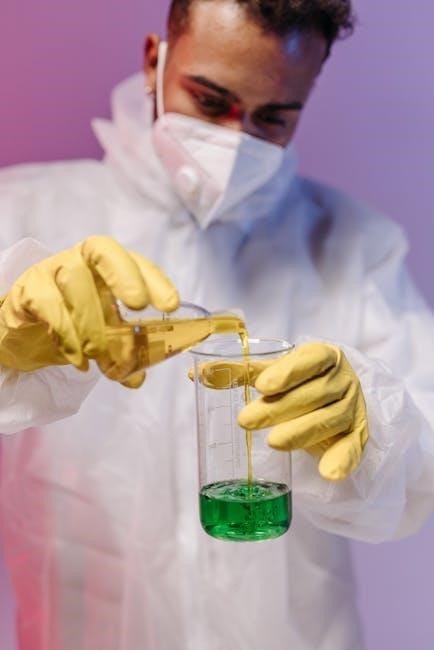
Following the heat shock, cells are incubated in broth to allow for recovery and expression of the plasmid-encoded genes.
Analyzing the Results of the Transformation
Analyzing transformation outcomes involves observing colony growth on different agar plates, assessing fluorescence under UV light, and comparing results to controls.
Plating on LB Agar Plates

Plating on LB agar serves as the initial step in evaluating the success of the bacterial transformation process. LB (Lysogeny Broth) agar provides a nutrient-rich environment supporting the growth of E. coli, regardless of whether they’ve taken up the pGLO plasmid.
This allows for the determination of the total number of viable bacterial cells that were recovered after the heat shock. By spreading a diluted sample of the transformed and non-transformed bacteria onto LB agar plates, we can observe colony formation.
The number of colonies appearing on these plates represents the total bacterial population, providing a baseline for comparison with the plates containing ampicillin. This initial plating helps establish a control to assess the overall efficiency of the transformation procedure, as detailed in lab resources like those found on Scribd.
Plating on LB Agar + Ampicillin Plates
Plating on LB agar supplemented with ampicillin is critical for identifying bacteria that have successfully incorporated the pGLO plasmid. The pGLO plasmid carries a gene conferring resistance to ampicillin, an antibiotic.
Only bacteria that have taken up the plasmid will be able to survive and grow on these plates, as the ampicillin inhibits the growth of non-transformed cells. Observing colony growth on LB + Ampicillin plates indicates successful transformation.
Comparing the growth on LB and LB + Ampicillin plates allows for a clear distinction between transformed and non-transformed bacteria, providing evidence of the plasmid’s presence. Resources like Scribd’s transformation lab keys highlight this differential growth as a key indicator of successful transformation.
Observing Colony Growth and Fluorescence
Observing colony growth on both LB and LB+Ampicillin plates is fundamental to assessing transformation success. Transformed bacteria, containing the pGLO plasmid, will grow on both, while untransformed cells only thrive on LB.
Crucially, the pGLO plasmid includes the GFP gene, encoding green fluorescent protein. Colonies from the LB+Ampicillin plate, if transformed, should exhibit a visible green glow when exposed to ultraviolet (UV) light.
This fluorescence serves as direct evidence of GFP gene expression, confirming the plasmid’s presence and functionality within the bacterial cells. Documents like transformation lab keys available on platforms such as Scribd emphasize fluorescence as a definitive positive result.

Interpreting the pGLO Transformation Lab Answers
Analyzing results from pGLO labs, often found in PDF format online, requires comparing growth on different plates and observing fluorescence to determine transformation success.
Expected Results: Positive and Negative Controls
Positive controls, cells with pGLO plasmid on ampicillin plates, should exhibit bacterial growth and fluorescence, confirming successful transformation and plasmid functionality. This demonstrates the plasmid’s ability to confer ampicillin resistance and express the GFP gene.
Negative controls – cells without pGLO on ampicillin – are expected to show no growth, indicating ampicillin sensitivity and the necessity of the plasmid for survival in its presence.
Cells without pGLO on LB agar should grow, demonstrating that the LB agar supports bacterial growth independent of the plasmid. Absence of fluorescence in all negative controls validates that fluorescence originates solely from the pGLO plasmid.
PDF lab keys, like those found on Scribd, often detail these expected outcomes, providing a benchmark for students to compare their results and assess the experiment’s validity.
Troubleshooting Common Issues
Lack of growth on ampicillin plates may indicate issues with competent cell preparation, insufficient heat shock, or degraded ampicillin. Ensure proper calcium chloride treatment and optimal heat shock duration.
Weak fluorescence could stem from low plasmid concentration, inefficient transformation, or photobleaching of GFP. Optimize plasmid amount and minimize UV exposure.
Contamination, indicated by growth on negative control plates, necessitates sterile technique review. Re-prepare solutions and sterilize equipment thoroughly.
PDF lab manuals, such as those available on Scribd, often include troubleshooting guides addressing these common problems. Careful observation and comparison to expected results are crucial for identifying and resolving issues, ensuring accurate pGLO transformation outcomes.
Analyzing Transformation Efficiency
Transformation efficiency, a key metric, quantifies the number of transformed cells per microgram of plasmid DNA. It’s calculated by dividing the number of colonies on the ampicillin plate by the mass of plasmid DNA used in the transformation.
Higher efficiency indicates successful competent cell preparation and optimized transformation protocol. Variations can arise from plasmid quality, heat shock effectiveness, and cell recovery conditions.
PDF lab resources, like those found on Scribd, often provide example calculations and expected efficiency ranges. Comparing your results to these benchmarks helps assess the experiment’s success.
Understanding transformation efficiency is vital for applications like gene cloning and protein production, allowing researchers to optimize procedures for maximal yield and accuracy.