Navigating boxing glove sizes can be tricky, as selecting the correct pair is crucial for safety and performance.
Understanding size charts and considering your weight, hand circumference, and training type are essential steps.
Why Proper Glove Size Matters
Selecting the appropriate boxing glove size isn’t merely about comfort; it’s fundamentally linked to injury prevention and maximizing training effectiveness. Gloves that are too small constrict your hands, hindering proper fist formation and increasing the risk of fractures or sprains during impact. Conversely, oversized gloves diminish dexterity and can compromise your punching power, making it harder to maintain technique and control.
Properly sized gloves provide essential padding, safeguarding your hands, wrists, and the bones within. This is particularly vital during sparring, where repeated blows demand robust protection. Furthermore, the right size ensures optimal weight distribution, contributing to better balance and reducing fatigue. A well-fitted glove allows for a secure grip, enhancing your confidence and control throughout your training session. Ignoring proper sizing can lead to long-term hand and wrist issues, potentially sidelining you from the sport.
Understanding Boxing Glove Weight (oz)
Boxing glove weight, measured in ounces (oz), doesn’t directly correlate to physical weight, but rather the amount of padding within the glove. Lower ounce gloves (6-8oz) are typically used by youth or for light bag work, offering minimal padding and emphasizing speed. As weight increases, so does the padding, providing greater protection for both the wearer and their sparring partner.
Common weights range from 10oz to 16oz. 10-12oz gloves are suitable for beginners and lighter individuals focusing on bag training. 14oz gloves are a versatile choice for intermediate boxers and general sparring. 16oz gloves are generally recommended for heavier individuals and competitive sparring, maximizing safety. It’s crucial to remember that competition rules often dictate specific glove weights, and choosing the right weight is a balance between protection, power, and adherence to regulations.

Measuring Your Hand for Boxing Gloves
Accurate hand measurement is vital for a secure and comfortable fit. Use a flexible tape measure to determine your hand circumference around the palm and knuckles.
How to Measure Hand Circumference
Measuring your hand circumference accurately is the foundation of finding the right boxing glove size. You’ll need a flexible measuring tape – the kind used for sewing is ideal. Begin by extending your hand fully, with your palm facing upwards. Wrap the tape measure around the widest part of your hand, directly across your knuckles.
Ensure the tape is snug but not overly tight; you want a comfortable measurement, not one that constricts your hand. Avoid holding your breath while measuring, as this can slightly alter the circumference. Record the measurement in inches or centimeters, depending on the sizing chart you’re using.
It’s helpful to have someone assist you with this process to ensure accuracy. Double-check the measurement to confirm it’s correct before referencing it against a boxing glove size chart. Remember, a precise measurement is key to selecting gloves that offer both protection and optimal performance during training or competition.
Converting Measurements to Glove Size
Converting your hand circumference to the appropriate boxing glove size requires referencing a reliable sizing chart. These charts typically correlate hand measurements with glove weights expressed in ounces (oz). Generally, smaller hand circumferences – around 5-6 inches (12.7-15.2 cm) – correspond to 6-8oz gloves, often suitable for youth or light bag work.
Medium hand sizes, approximately 6-7 inches (15.2-17.8 cm), usually align with 10-12oz gloves, ideal for beginners and intermediate training. Larger hands, measuring 7 inches (17.8 cm) or more, often require 14oz or larger gloves for adequate protection.
However, remember these are general guidelines. Body weight also plays a role; heavier individuals may benefit from heavier gloves even with smaller hands. Always consult specific brand size charts, as sizing can vary. Prioritize a snug, comfortable fit that allows for full hand mobility without being overly restrictive.
Boxing Glove Sizing Charts by Weight Class
Weight class significantly influences glove size selection, ensuring appropriate protection and training effectiveness. Charts categorize recommendations based on body weight for optimal fit and safety.
Sizing for Beginners (Under 100 lbs / 45 kg)
For individuals weighing under 100 lbs (45 kg), selecting the right boxing glove size is paramount for developing proper technique and preventing injuries. Generally, youth or smaller-sized gloves are recommended. A 6-8oz glove is often ideal for this weight class, particularly for younger beginners or those just starting their boxing journey.
These lighter gloves allow for easier hand movement and control, facilitating the learning process. It’s crucial to prioritize comfort and a snug, yet not overly tight, fit. Remember that a proper fit ensures adequate wrist support and minimizes the risk of strain. Consider gloves specifically designed for bag work and light sparring, focusing on ample padding for protection.
When measuring, a hand circumference of up to 5-6 inches typically corresponds to these smaller glove sizes. Always consult brand-specific sizing charts, as variations can occur. Prioritizing a secure fit and appropriate weight will build a solid foundation for future training.
Sizing for Intermediate (101-150 lbs / 46-68 kg)
Intermediate boxers, weighing between 101-150 lbs (46-68 kg), typically require gloves in the 10-12oz range. This weight class represents a significant step up in training intensity, demanding gloves that offer a balance of protection and maneuverability. A 10oz glove is suitable for lighter bag work and pad sessions, while 12oz provides enhanced cushioning for more rigorous training and light sparring.
Hand circumference plays a vital role; a measurement of 6-7 inches generally aligns with these sizes. It’s essential to consider the type of training. For consistent bag work, a slightly lighter glove might be preferred, whereas sparring necessitates the added protection of a 12oz option.
Always refer to specific brand sizing charts, as fits can vary. A secure, comfortable fit is crucial, allowing for full range of motion without compromising wrist support. Prioritize gloves with quality padding and construction for optimal performance and injury prevention.
Sizing for Advanced (151-175 lbs / 69-80 kg+)
Advanced boxers, exceeding 151 lbs (69 kg) and up to 175 lbs (80 kg+), generally benefit from 14oz boxing gloves. This weight class demands maximum protection due to increased power and training intensity. While some may opt for 16oz gloves, 14oz strikes a balance between safety and maintaining sufficient hand speed and control.
Hand size is critical; individuals with larger hands or those exceeding a 7-inch circumference should lean towards the 16oz option. The focus shifts towards sparring and competitive training, requiring robust padding to minimize impact and prevent injuries.
Brand-specific sizing charts are invaluable, as glove fits differ. Ensure a snug, yet comfortable fit, allowing for proper fist closure without constriction. Prioritize gloves with excellent wrist support and durable construction to withstand the demands of advanced training regimens.

Glove Size Recommendations by Training Type
Selecting gloves depends on your training focus. Bag work often uses lighter weights, while sparring requires heavier padding for safety. Competition gloves adhere to specific regulations.
Bag Gloves Sizing
Bag gloves are designed for heavy bag work and focus mitt drills, prioritizing hand and wrist support alongside impactful power transfer. Generally, lighter-weight bag gloves are preferred to enhance hand speed and endurance during prolonged sessions. For individuals weighing up to 100 lbs (45 kg), a 6-8 oz glove is often recommended, particularly for youth boxers.
Those between 101-150 lbs (46-68 kg) typically find a comfortable and protective fit with 10-12 oz gloves. As weight increases to 151-175 lbs (69-80 kg+), a 14 oz or even 16 oz glove may be necessary to provide adequate cushioning and support. Some charts suggest up to 8oz for individuals up to 130lbs (60kg), and 8.75oz for those up to 154lbs (71kg).
Remember, these are guidelines; individual preferences and hand size play a role. Always prioritize a snug, secure fit that allows for full range of motion without feeling restrictive. Proper padding is crucial to minimize the risk of injury during intense bag work.
Sparring Gloves Sizing
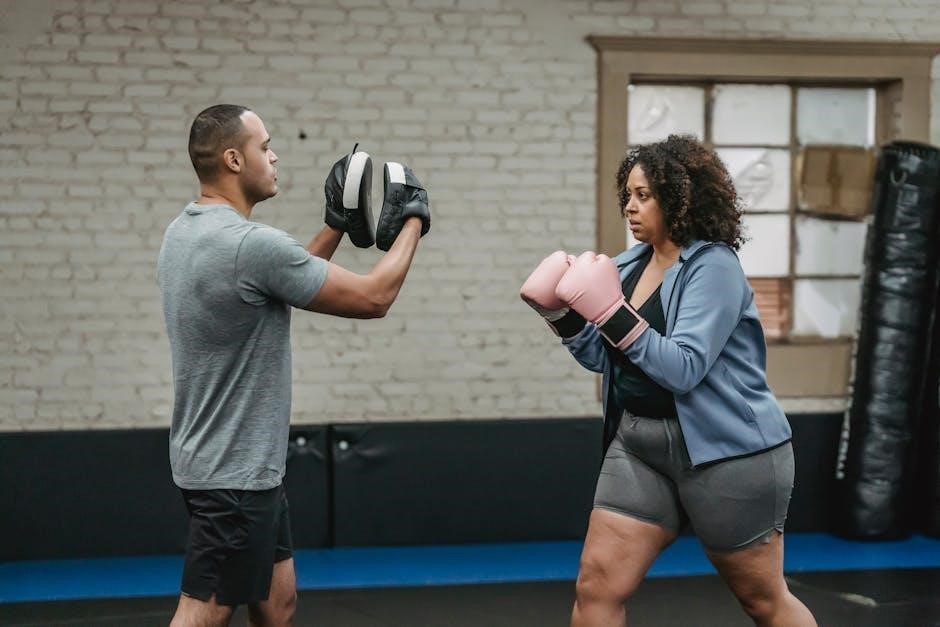
Sparring gloves prioritize safety for both partners, demanding more substantial padding than bag gloves. The goal is to distribute impact and minimize the risk of cuts, bruises, and concussions. Generally, a heavier glove weight is recommended for sparring, typically 16oz for most adults. This increased padding provides crucial protection during live combat simulations.
However, weight class considerations apply. Individuals under 150 lbs (68 kg) may be permitted to use 14oz gloves, while those over 175 lbs (80 kg) might require 18oz or even 20oz gloves, depending on gym or competition rules. It’s vital to check with your coach or governing body for specific requirements.
A snug, secure fit is still essential, but sparring gloves often feel bulkier due to the extra padding. Ensure your hand isn’t swimming inside the glove, but also that movement isn’t overly restricted. Rival suggests sizing similarly to trainers, but with potentially more weight.
Competition Gloves Sizing
Competition boxing gloves are highly regulated, with specific weight requirements dictated by boxing organizations and weight classes. Typically, professional boxers use 10oz gloves, but this is strictly for those competing below 147 lbs (66.7 kg). As weight classes increase, glove weight also increases to ensure fighter safety and a level playing field.
For example, fighters between 147 lbs and 160 lbs (66.7 – 72.6 kg) generally use 12oz gloves, while those above 160 lbs may be required to wear 14oz or even 16oz gloves. These regulations are in place to mitigate the impact of punches and reduce the risk of serious injury.
Unlike training gloves, competition gloves often have a more streamlined design and less padding, prioritizing feel and precision. A precise fit is paramount, allowing for optimal hand control and punch delivery. Always confirm the specific glove weight required by the sanctioning body for your competition.
Specific Brand Size Charts
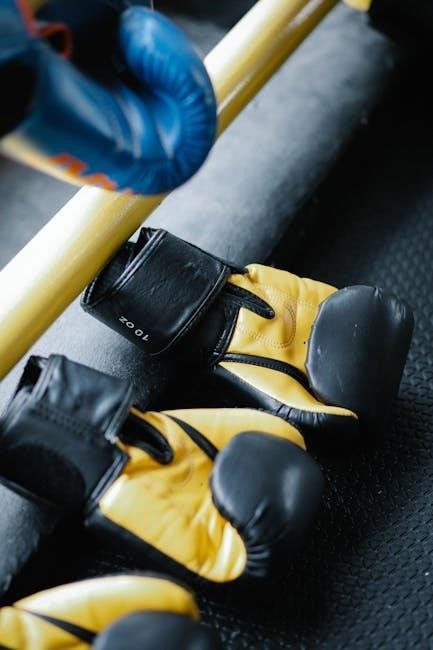
Brand sizing varies, so consulting specific charts—like Rival or Bronx Endurance—is vital. These charts correlate hand circumference with recommended glove sizes for a perfect fit.
Rival Boxing Gloves Size Chart
Rival Boxing offers a comprehensive sizing guide to ensure optimal protection and performance. Their gloves are known for their quality and fit, making accurate sizing particularly important. Generally, Rival sparring gloves are sized similarly to training gloves, but may have slightly increased padding, potentially influencing the preferred size.
For individuals weighing under 100 lbs (45 kg), a 6-8oz glove is typically recommended. Those between 101-150 lbs (46-68 kg) should consider a 10-12oz glove. Heavier individuals, weighing 151-175 lbs (69-80 kg+), generally benefit from a 14-16oz glove. However, Rival emphasizes considering hand size alongside weight.
To determine your ideal size, measure your hand circumference. Rival’s chart often provides measurements in centimeters. A hand circumference up to 20cm corresponds to a smaller size, while larger hands (up to 25cm) require larger gloves. Remember, a snug but comfortable fit is crucial for maximizing protection and control during training or sparring. Always refer to the official Rival Boxing website for the most up-to-date and detailed sizing information.
Bronx Endurance Boxing Gloves Size Chart
Bronx Endurance provides detailed sizing recommendations to help boxers find the perfect fit for their gloves. Their sizing charts consider both weight and hand circumference, ensuring optimal comfort and protection. For bag gloves, Bronx Endurance suggests a size range based on body weight, offering options from S to L.
Individuals weighing 100-130 lbs (45-60 kg) with a hand size up to 20cm should opt for a size S (maximum 8oz). Those between 135-154 lbs (60-71 kg) and a hand size up to 22cm should choose size M (maximum 8.75oz). For boxers weighing 160-190 lbs (75-85 kg) with a hand size up to 25cm, size L (maximum 9.75oz) is recommended.
It’s crucial to measure hand circumference around the palm and knuckles for an accurate fit. Bronx Endurance emphasizes that these are guidelines, and individual preferences may vary. A properly fitted glove should feel snug but not restrictive, allowing for full range of motion and impact absorption. Always consult the official Bronx Endurance website for the most current sizing chart and detailed product specifications.

Youth Boxing Glove Sizing
Selecting youth boxing gloves requires considering age and weight; typically, 6-8oz gloves suit younger, lighter boxers, while 10-12oz are for older teens.
Age-Based Sizing Guidelines
Determining the appropriate boxing glove size based on age is a helpful starting point, especially for young athletes. Generally, children aged 8-12, often weighing under 85 lbs (39 kg), typically benefit from 8oz gloves. These lighter gloves aid in developing proper technique without overwhelming their hands.
As boxers progress to the teenage years (13-15), and their weight increases – generally between 85-130 lbs (39-59 kg) – a move to 10oz or 12oz gloves is recommended. This provides increased protection during training and sparring. For older teens (16+), approaching adult weights, 12oz to 14oz gloves become suitable, mirroring adult sizing considerations.
However, age is merely a guideline. Individual growth rates and body weight variations are significant. It’s crucial to combine age-based recommendations with weight-based assessments and, most importantly, a proper hand measurement to ensure a secure and comfortable fit. Prioritizing safety and proper technique development is paramount when selecting gloves for young boxers.
Weight-Based Sizing for Youth
Weight is a primary factor when selecting boxing gloves for young athletes. For youth boxers weighing under 60 lbs (27 kg), a 6oz to 8oz glove is generally recommended, providing sufficient protection without hindering movement. As weight increases to between 60-80 lbs (27-36 kg), transitioning to 8oz or 10oz gloves offers enhanced padding.
Boxers weighing 80-100 lbs (36-45 kg) should consider 10oz to 12oz gloves, striking a balance between protection and maneuverability. For youth athletes exceeding 100 lbs (45 kg), 12oz or even 14oz gloves may be necessary, depending on their training intensity and sparring frequency.
It’s important to remember these are guidelines. A child’s build and experience level should also be considered. A heavier child with limited experience might benefit from a slightly larger glove for increased safety. Always prioritize a snug, comfortable fit, allowing for full hand articulation.
Additional Considerations
Hand shape and padding density significantly impact fit. A wider hand may require a broader glove, while extra padding influences the overall size needed for optimal protection.
Hand Shape and Glove Fit
Understanding your hand’s unique shape is paramount when selecting boxing gloves. Not all hands are created equal; some are broader across the knuckles, while others are more slender. A glove that fits perfectly for one person might feel constricting or loose on another, even with the same measurements.
Consider the palm circumference alongside hand length. A wider palm generally necessitates a glove with a wider opening. Pay attention to how the glove feels around your knuckles – they should be comfortably protected without feeling overly compressed.
Check for adequate wrist support. The glove should extend sufficiently down the wrist to provide stability and prevent injuries. A snug, but not tight, fit is ideal. You should be able to make a fist comfortably without any pinching or restriction. Always prioritize comfort and security when assessing the glove fit, as this directly impacts your performance and safety during training or competition.
Glove Padding and its Impact on Size
The amount of padding within a boxing glove significantly influences its overall size and feel. Gloves designed for bag work typically have less padding, resulting in a more compact fit and enhanced feel for precision. Conversely, sparring gloves prioritize protection and feature substantially more padding, leading to a bulkier size.
Increased padding doesn’t necessarily mean you need a larger glove size, but it does affect the internal space. A heavily padded glove might feel snugger than a lighter padded glove of the same nominal size.
Consider the type of padding – foam density and layering impact both protection and size. Higher-density foam offers superior impact absorption but can add to the glove’s overall bulk. When trying on gloves, assess how the padding distributes impact and whether it allows for a natural fist formation. Prioritize adequate protection without sacrificing mobility or control.