Navigating the world of 3D printing begins with understanding filaments – the materials that bring digital designs to life. This comprehensive guide explores filament types,
properties, and applications, empowering you to select the ideal material for successful prints.
Choosing the correct filament is crucial for achieving desired results, impacting print quality, strength, and durability. Let’s delve into the specifics!
What is 3D Printer Filament?
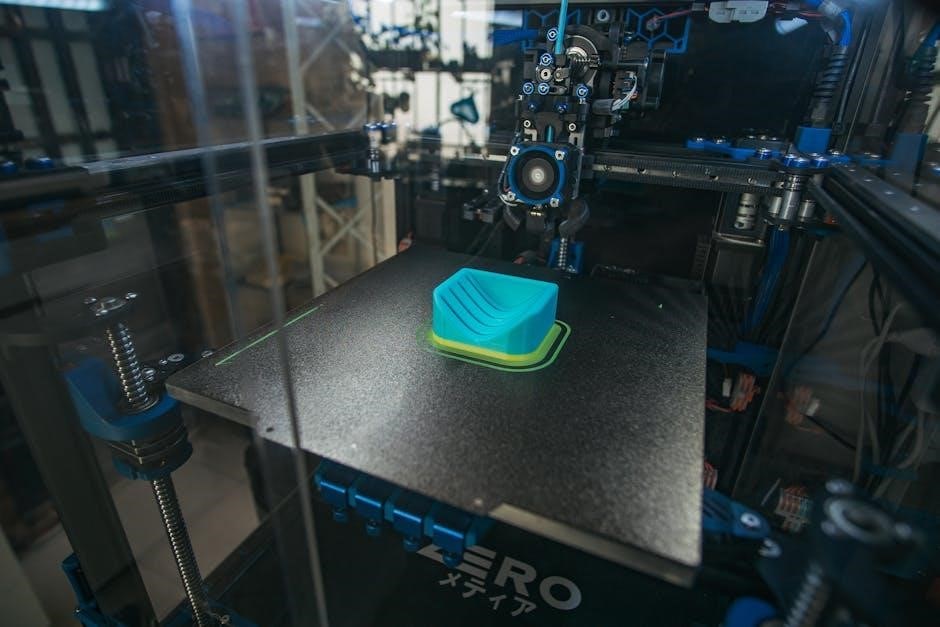
3D printer filament is the thermoplastic material fed through a 3D printer’s nozzle to create three-dimensional objects, layer by layer. Typically supplied on spools, it’s the “ink” for your 3D printer, available in various materials like PLA, ABS, PETG, and more specialized options.
These materials are heated and extruded, solidifying as they cool, forming the desired shape. Filament diameter, commonly 1.75mm or 2.85mm, must match your printer’s specifications. Understanding filament composition is key, as each material possesses unique characteristics impacting print quality, strength, and application suitability.
Why Choosing the Right Filament Matters
Selecting the appropriate filament is paramount to 3D printing success. Incorrect material choices can lead to frustrating issues like poor adhesion between layers, resulting in weak or delaminated prints. Brittleness can cause parts to fracture easily, while warping occurs when the material shrinks unevenly during cooling.
The right filament ensures optimal strength, durability, and functionality for your project. Considering factors like heat resistance, flexibility, and chemical exposure is vital. Matching the filament to the intended application guarantees a finished product that meets your specific needs and expectations.
Common 3D Printer Filament Types
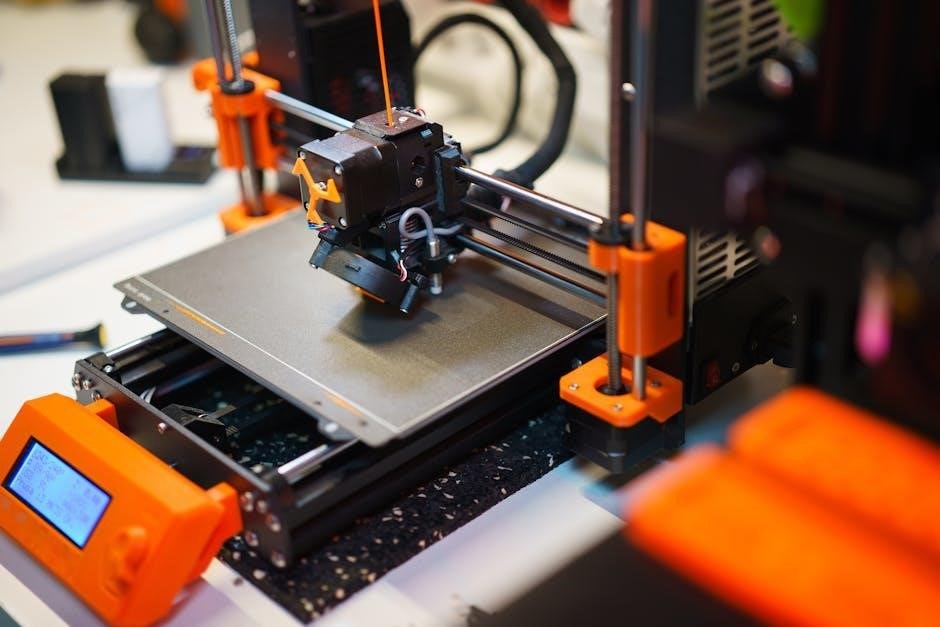
Several filaments dominate the 3D printing landscape, each offering unique characteristics. PLA, ABS, and PETG are widely used due to their balance of printability and properties.
PLA Filament (Polylactic Acid)
PLA is a popular thermoplastic derived from renewable resources like cornstarch or sugarcane, making it biodegradable under specific conditions. Known for its ease of printing, PLA requires lower temperatures and doesn’t typically necessitate a heated bed.
PLA’s properties include rigidity and a relatively low melting point, resulting in parts that are strong but can become brittle. It exhibits minimal warping and odor during printing, making it ideal for beginners.
PLA: Properties and Characteristics
PLA is characterized by its low printing temperature, minimal odor, and biodegradability. It’s a rigid material with good detail reproduction.
PLA: Ideal Applications
PLA excels in creating prototypes, educational models, toys, and decorative items. It’s not recommended for parts requiring high heat resistance or durability.
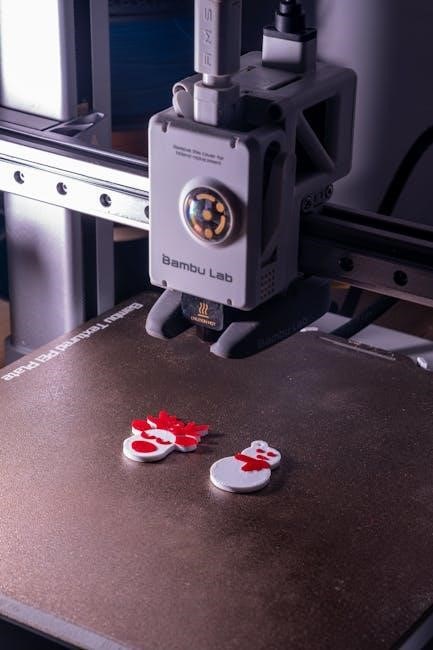
PLA boasts a glass transition temperature of around 60°C, meaning it softens and loses rigidity at relatively low temperatures. This impacts its suitability for heat-exposed applications. It’s known for its low odor during printing, a significant advantage for indoor use.
PLA exhibits excellent detail reproduction, making it ideal for intricate designs and models. However, it’s relatively brittle compared to other filaments and can be prone to cracking under stress. Its rigidity contributes to dimensional stability during printing.
Key characteristics include biodegradability (in industrial composting facilities) and a low printing temperature range (180-220°C).
PLA shines in applications prioritizing aesthetics and ease of printing. It’s perfect for prototyping, educational models, and visual aids where high strength isn’t paramount. Think architectural models, figurines, and decorative items – PLA’s detail reproduction excels here.
Low-stress parts and non-functional prototypes also benefit from PLA’s simplicity. It’s a fantastic choice for beginners due to its forgiving nature. However, avoid using PLA for parts subjected to significant heat, impact, or prolonged outdoor exposure.
Common uses include toys, phone cases (for aesthetic purposes), and artistic creations.
ABS Filament (Acrylonitrile Butadiene Styrene)
ABS is a robust thermoplastic known for its durability and resistance, making it a popular choice for functional parts. It offers a good balance of strength, toughness, and heat resistance compared to PLA. This filament is widely used in manufacturing and engineering applications requiring a more resilient material.
ABS exhibits higher temperature resistance, allowing it to withstand more demanding environments. It’s often favored for parts that will experience stress or impact, like automotive components and protective casings. However, printing ABS requires careful consideration due to its tendency to warp.
ABS: Properties and Characteristics
ABS filament boasts impressive mechanical properties, including high impact strength and good tensile strength. It’s a relatively rigid material, offering excellent durability for functional prototypes and end-use parts. ABS also demonstrates good chemical resistance, making it suitable for applications involving exposure to various substances.
A key characteristic of ABS is its higher glass transition temperature (around 105°C) compared to PLA. This means it can withstand higher temperatures without deforming. However, this also contributes to its propensity to warp during printing, requiring a heated bed and often an enclosure for optimal results.
ABS: Ideal Applications & Considerations
ABS excels in applications demanding durability and heat resistance, such as automotive parts, protective cases, and functional prototypes subjected to stress. Its strength makes it suitable for items needing repeated use or exposure to impact. LEGO bricks are famously made from ABS, highlighting its toughness!
However, printing with ABS requires careful consideration. Warping is a common issue, necessitating a heated bed (100-110°C) and ideally an enclosed printer to maintain consistent temperatures. ABS also emits fumes during printing, so good ventilation is crucial. Nozzle temperature typically ranges from 230-260°C.
PETG Filament (Polyethylene Terephthalate Glycol-modified)
PETG is a popular choice, bridging the gap between PLA’s ease of printing and ABS’s strength. It’s a glycol-modified version of PET (used in water bottles), offering improved impact resistance, flexibility, and chemical resistance compared to its predecessor. PETG boasts excellent layer adhesion, resulting in robust prints.
This filament is known for its versatility, making it suitable for both functional parts and aesthetic models. It exhibits lower warping tendencies than ABS and doesn’t require a heated chamber, simplifying the printing process for many users. Typical printing temperatures range from 220-250°C.
PETG: Properties and Characteristics
PETG presents a unique combination of desirable properties. It’s inherently strong and durable, exhibiting good tensile strength and impact resistance. Notably, PETG demonstrates excellent chemical resistance, withstanding exposure to various substances. Its relatively low shrinkage rate minimizes warping during printing, a common issue with ABS.
Furthermore, PETG is partially crystalline, contributing to its toughness and dimensional stability. It’s also food-safe, making it suitable for printing containers holding consumables. The material is slightly flexible, offering a degree of pliability without sacrificing rigidity. PETG is also known for its glossy finish.
PETG: Advantages over PLA and ABS
PETG bridges the gap between PLA and ABS, offering benefits of both while mitigating their drawbacks. Compared to PLA, PETG boasts superior strength, durability, and heat resistance, making it suitable for functional parts. Unlike ABS, PETG doesn’t require a heated bed for successful printing, simplifying the process.
It also exhibits lower odor and warping tendencies than ABS, improving the printing experience. While PLA is easier to print, PETG’s enhanced mechanical properties and chemical resistance make it a more versatile choice for a wider range of applications. PETG offers a balance of printability and performance.
Engineering Filaments
Engineering filaments offer enhanced mechanical and thermal properties, exceeding standard materials like PLA and ABS. These specialized plastics are designed for demanding applications requiring durability and resilience.
Nylon Filament (Polyamide)
Nylon filament, a polyamide thermoplastic, is renowned for its exceptional strength, flexibility, and durability. It exhibits high resistance to wear, abrasion, and many chemicals, making it suitable for functional prototypes and end-use parts.
Common applications include gears, hinges, and other components needing robust performance. However, nylon presents printing challenges due to its tendency to absorb moisture, requiring careful drying before use.
Printing nylon often necessitates heated build plates and enclosures to prevent warping and ensure layer adhesion. Despite these complexities, the resulting parts offer superior mechanical properties compared to many other filaments.
Nylon: Strength, Flexibility & Durability
Nylon: Applications and Printing Challenges
Nylon’s inherent properties deliver exceptional performance in 3D printed parts. It boasts high tensile strength, meaning it resists breaking under tension, and excellent flexibility, allowing it to bend without snapping. This combination makes it ideal for functional parts subjected to stress.
Furthermore, nylon exhibits remarkable durability, resisting wear and tear over time. Its abrasion resistance is significantly higher than PLA or ABS, ensuring longevity. These characteristics position nylon as a top choice when demanding mechanical performance is paramount.
It’s a truly robust material!
Nylon’s strength and durability unlock diverse applications. It’s frequently used for functional prototypes, gears, hinges, and other mechanical components requiring resilience. Applications extend to the automotive, robotics, and even fashion industries, where flexible and strong parts are needed.
However, nylon presents printing challenges. It’s highly hygroscopic, readily absorbing moisture from the air, leading to printing defects. A dry filament is crucial! Printing often requires higher temperatures and a heated bed, and an enclosure is recommended to manage warping. Proper preparation is key to success.
Polycarbonate (PC) Filament
Polycarbonate is renowned for exceptional strength and heat resistance, making it ideal for demanding applications. This engineering filament boasts high impact resistance and can withstand temperatures significantly higher than PLA or ABS. It’s often chosen for parts needing durability and stability in harsh environments.
However, printing with polycarbonate demands specific conditions. High nozzle temperatures (270-310°C) and a heated bed (110-130°C) are essential. An enclosed printer is strongly recommended to prevent warping and ensure layer adhesion. Proper ventilation is also important due to potential fumes.
Polycarbonate: High Strength & Heat Resistance
Polycarbonate (PC) filament distinguishes itself through remarkable mechanical properties. It exhibits exceptional tensile strength, surpassing many other 3D printing materials, and boasts superior impact resistance, making it less prone to fracturing under stress. This inherent durability makes PC ideal for functional parts and prototypes.
Furthermore, PC demonstrates excellent thermal stability. Its high glass transition temperature allows it to maintain structural integrity at elevated temperatures – typically up to 110°C, and sometimes higher – far exceeding the heat resistance of common filaments like PLA and ABS. This makes it suitable for automotive or aerospace components.
Polycarbonate: Printing Requirements
Printing with Polycarbonate demands a well-prepared 3D printing setup. A heated bed is absolutely essential, typically maintained between 110-130°C, to ensure proper adhesion and prevent warping; An enclosed printer is highly recommended to maintain a consistent, elevated ambient temperature, minimizing layer separation.
Nozzle temperatures also need to be high, generally ranging from 260-300°C. Due to PC’s abrasive nature, a hardened steel nozzle is crucial to resist wear. Slow print speeds are recommended to allow the material to cool and solidify correctly, and proper drying of the filament before use is vital to prevent printing defects.
Specialty & Advanced Filaments
Beyond standard materials, specialty filaments unlock unique capabilities. These include flexible TPU, strong carbon fiber composites, and others, expanding design possibilities and functional applications.
TPU/TPE Filament (Thermoplastic Polyurethane/Elastomer)
TPU and TPE filaments offer exceptional flexibility, making them ideal for parts requiring elasticity, like phone cases, gaskets, or wearable items. These materials boast high impact resistance and durability, absorbing shock and stress effectively.
However, printing with TPU/TPE presents unique challenges. Slower print speeds are generally required to prevent filament buckling and ensure proper layer adhesion. Direct drive extruders are often preferred over Bowden setups for better control. Careful calibration of retraction settings is also crucial for minimizing stringing.
TPU/TPE: Flexibility and Applications
The defining characteristic of TPU/TPE is its remarkable flexibility, allowing for the creation of parts that can bend, stretch, and compress without breaking. This makes them perfect for applications demanding resilience and conformability. Common uses include flexible phone cases, durable seals, and functional prototypes needing rubber-like properties.
Beyond these, TPU/TPE excels in creating wearable technology components, custom insoles, and even tires for small robotics projects. Its ability to absorb impact makes it suitable for protective gear and damping elements, offering a unique blend of strength and pliability.
TPU/TPE: Printing Considerations
Printing with TPU/TPE requires a slower print speed to ensure proper layer adhesion and prevent filament buckling. Direct drive extruders are highly recommended, as they offer better control and reduce the risk of filament tangling. Retraction settings need careful adjustment – too much can cause jams, while too little leads to stringing.
A heated bed isn’t always essential, but can improve adhesion. Experimentation is key! Due to its flexibility, TPU/TPE can be challenging to support; designs should be optimized to minimize the need for supports whenever possible. Patience and fine-tuning are vital for successful TPU/TPE prints.
Carbon Fiber Reinforced Filaments
Carbon fiber filaments combine a base polymer, typically PLA or PETG, with short carbon fibers, dramatically increasing strength and rigidity. These filaments offer exceptional stiffness and dimensional stability, making them ideal for functional parts and prototypes requiring high performance. However, the addition of carbon fiber introduces unique printing challenges.
Notably, carbon fiber is abrasive, leading to increased nozzle wear. Hardened steel nozzles are essential to prevent premature failure. Careful temperature control and proper bed adhesion are also crucial for successful prints with these advanced materials.
Carbon Fiber: Increased Strength & Rigidity
Carbon fiber reinforcement significantly elevates a filament’s mechanical properties. The addition of these fibers dramatically boosts tensile strength and flexural modulus, resulting in parts that are considerably stiffer and more durable than those printed with standard materials. This enhancement makes carbon fiber filaments excellent choices for applications demanding high structural integrity.
The fibers distribute stress throughout the part, reducing the likelihood of deformation or breakage under load. This is particularly beneficial for creating lightweight yet robust components, ideal for robotics, drones, and automotive applications.
Carbon Fiber: Abrasiveness and Nozzle Wear
A significant drawback of carbon fiber filaments is their abrasive nature. The hard carbon fibers can rapidly wear down standard brass printer nozzles, leading to decreased print quality and potential nozzle failure. This wear manifests as a widening of the nozzle orifice, impacting dimensional accuracy and surface finish.
To mitigate this, hardened steel or ruby-tipped nozzles are strongly recommended. These materials offer superior resistance to abrasion, extending nozzle lifespan and ensuring consistent performance when working with carbon fiber-reinforced materials. Regular nozzle inspection is also crucial.
Filament Properties to Consider
Key filament properties dictate print success. Strength, heat resistance, flexibility, and chemical/UV resistance are vital factors influencing material selection for specific applications.
Strength and Durability
Strength and durability are paramount when 3D printing functional parts or items subjected to stress. Different filaments exhibit vastly different mechanical properties. PLA, while easy to print, is relatively brittle. ABS offers improved strength and impact resistance, making it suitable for more demanding applications.
Engineering filaments like Nylon and Polycarbonate excel in these areas, providing exceptional toughness and resistance to wear and tear. Carbon fiber reinforcement further enhances strength and rigidity. Consider the intended use of your print – will it bear weight, withstand impacts, or endure repeated use? Selecting a filament with appropriate strength is crucial for longevity.
Heat Resistance
Heat resistance defines a filament’s ability to maintain its structural integrity at elevated temperatures. PLA has a relatively low glass transition temperature, softening and deforming easily with heat. ABS offers better heat resistance, suitable for parts exposed to moderate temperatures.
For applications requiring high-temperature performance, Polycarbonate (PC) is an excellent choice, withstanding significant heat without losing shape. Nylon also exhibits good heat resistance. Consider the operating environment of your printed object; if it will be exposed to sunlight, engine heat, or other thermal stressors, selecting a heat-resistant filament is vital.
Flexibility and Impact Resistance
Flexibility and impact resistance are key when a part needs to bend, stretch, or withstand forceful impacts. Rigid filaments like PLA and ABS are prone to cracking under stress. TPU and TPE filaments, however, are highly flexible and exhibit excellent impact resistance, making them ideal for phone cases or flexible joints.
Nylon also offers a good balance of strength and flexibility. Carbon fiber reinforced filaments increase rigidity but can reduce impact resistance. Consider the intended use; if the part will experience bending or impacts, prioritize flexible or impact-resistant materials.
Chemical Resistance & UV Resistance
Chemical and UV resistance determine a part’s longevity when exposed to harsh environments. PLA is generally poor in both areas, susceptible to degradation from moisture, chemicals, and sunlight. ABS offers better chemical resistance but can yellow and become brittle with prolonged UV exposure.
PETG demonstrates good resistance to many chemicals and moderate UV resistance. Nylon excels in chemical resistance, while Polycarbonate provides superior UV stability. For outdoor applications or parts contacting chemicals, selecting filaments with appropriate resistance is vital for maintaining structural integrity and appearance.
Choosing the Right Filament for Your Project
Selecting the ideal filament hinges on your project’s demands and your 3D printer’s capabilities. Consider application requirements, desired properties, and printer compatibility for optimal results.
Considering Application Requirements
Before selecting a filament, meticulously analyze your project’s intended use. Is it a decorative item, a functional part, or something requiring high durability?
For purely aesthetic prints, PLA often suffices. However, if the object will endure stress, heat, or outdoor exposure, consider ABS, PETG, Nylon, or Polycarbonate.
Think about flexibility – TPU/TPE is ideal for bendable parts. Chemical resistance is vital for containers, while UV resistance matters for outdoor applications.
Precisely defining these needs narrows your filament choices, ensuring a successful and long-lasting final product. Prioritize function over form when necessary!
Compatibility with Your 3D Printer
Not all filaments are universally compatible with every 3D printer. Check your printer’s specifications regarding supported materials and temperature ranges.
Some filaments, like ABS, require a heated bed and enclosure to prevent warping. Printers designed for PLA may struggle with higher-temperature materials.
Nozzle size also matters; abrasive filaments like carbon fiber necessitate hardened steel nozzles to resist wear. Ensure your extruder can handle the filament’s diameter.
Upgrading printer components might be necessary for certain filaments. Always research compatibility before purchasing to avoid frustration and potential damage.